 Panacea Bio Chem — Technical Specification
Metabolic Peptide Engineering · Rev. 2026‑07
Panacea Bio Chem — Technical Specification
Metabolic Peptide Engineering · Rev. 2026‑07
Panacea Bio Chem — Technical Specification
Metabolic Peptide Engineering · Rev. 2026‑07
Panacea Bio Chem — Technical Specification
Metabolic Peptide Engineering · Rev. 2026‑07
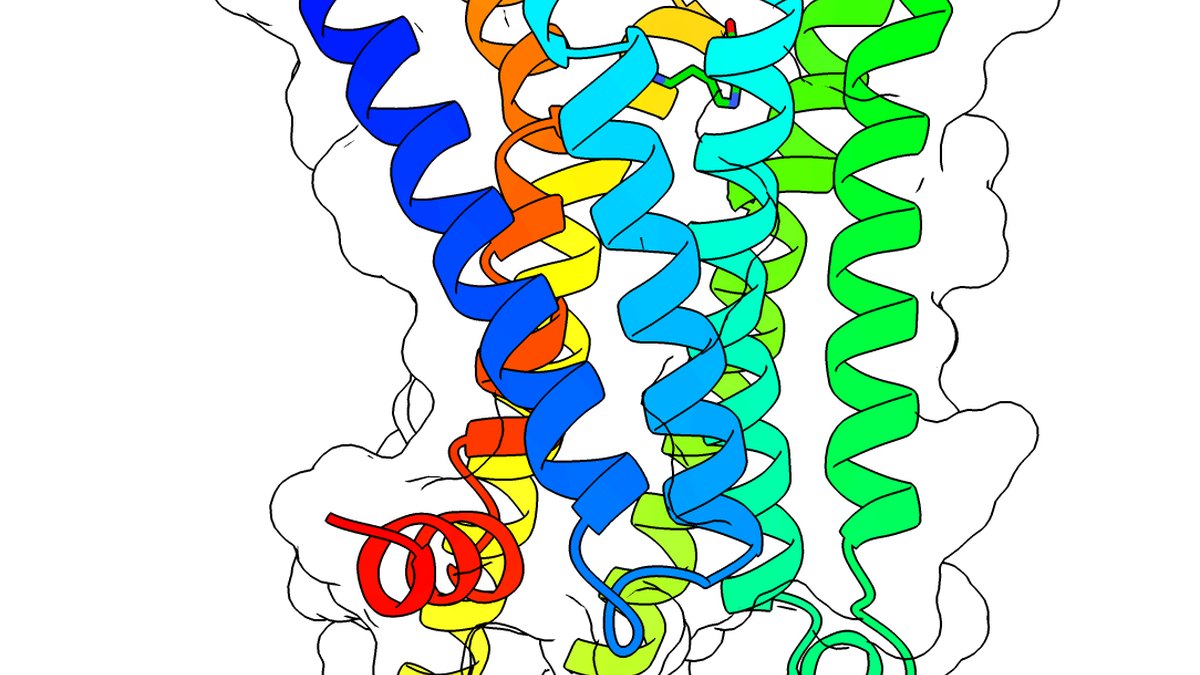
The GLP‑1 drugs opened metabolic medicine; the next lever is a different hormone entirely. Amylin, co‑secreted with insulin, curbs appetite through a circuit that GLP‑1 does not use — and its receptor is the calcitonin receptor wearing an accessory protein. This specification explains, in plain terms, what amylin and calcitonin receptor agonists are, how pramlintide, cagrilintide and CagriSema add satiety on top of the incretin toolbox, and where Amylcaltrutide — Panacea Bio Chem's investigational entry — sits. It is an educational overview of published science; the specific Amylcaltrutide sequence and data are proprietary and supplied by the operator. Nothing here is medical advice.
Every time your pancreas releases insulin, it releases a second, less famous hormone from the very same cells: amylin1, also called islet amyloid polypeptide. Where insulin manages glucose, amylin manages the meal — it slows how fast the stomach empties, quietens the counter‑hormone glucagon, and tells the brainstem that you have eaten enough. It is, in plain words, a natural brake on appetite that fires alongside insulin at every meal.
That makes amylin a different tool from the one everyone now knows. The GLP‑12 drugs — semaglutide and its relatives — copy a gut hormone and act mostly through glucose‑dependent insulin release and central fullness. Amylin acts through a separate circuit. So instead of competing with GLP‑1, an amylin drug stacks on top of it: two brakes on appetite, pressing through two different pedals. That is the whole idea behind the newest weight‑management peptides.
The surprising part is the receptor. There is no dedicated “amylin gene receptor.” The amylin receptor is built by taking the calcitonin receptor3 — the one that handles blood calcium — and clipping on a tiny helper protein called a RAMP4 (receptor activity‑modifying protein). The same receptor, re‑dressed, answers to a metabolic hormone. That shared hardware is why the class is named for both amylin and calcitonin, and why a single peptide can be tuned to hit either or both.
Amylin and calcitonin are cousins in sequence and in hardware, but they carry different messages. The table below is the plain division of labour — and the reason a dual amylin/calcitonin receptor agonist (a DACRA) is an attractive single molecule: it can borrow the appetite‑suppressing signal of amylin and the long, potent binding behaviour of calcitonin at the same time.
| Hormone / target | Principal action |
|---|---|
| Amylin (AMY receptors) | Slows gastric emptying · suppresses glucagon · signals satiety via the area postrema — co‑released with insulin |
| Calcitonin receptor (CTR) | Lowers blood calcium · the base receptor that, plus a RAMP, becomes the amylin receptor — salmon calcitonin binds it potently and durably |
| RAMP 1 / 2 / 3 | Accessory proteins that convert the calcitonin receptor into amylin receptors AMY‑1, AMY‑2, AMY‑3, shaping which peptide it prefers |
| GLP‑1 (for contrast) | Separate incretin pathway — glucose‑dependent insulin release & central satiety; complementary, not overlapping |
The accessory proteins were not discovered by anyone looking for an amylin receptor. In 1998 McLatchie and colleagues, working on a different receptor entirely, reported a family of single‑pass membrane proteins that changed where a receptor was trafficked and which ligand it answered to, and named them RAMPs.13 The consequence for amylin arrived the following year, from two laboratories at once: co‑express the calcitonin receptor with a RAMP and an amylin receptor appears where there was none.14,15 Christopoulos and colleagues reported multiple amylin receptors arising from RAMP interaction with the calcitonin receptor gene product; Muff and colleagues, publishing independently the same year, reported an amylin receptor revealed by co‑transfecting a calcitonin receptor with RAMP‑1 or RAMP‑3. Two groups, two journals, one result.
The three subtypes are not interchangeable, and that is what the field means by receptor balance. They differ in how strongly they answer amylin, calcitonin and CGRP, so a peptide that looks like a single drug is in fact addressing a small panel of related receptors in a proportion the chemist chooses.16 It is a measurable axis rather than a slogan: a 2022 comparison of two long‑acting agents in this class, cagrilintide and KBP‑336, was designed around exactly that question — and its title asks it outright, Does receptor balance matter?17 Structural work published in 2026 has since described how cagrilintide engages both the amylin and the calcitonin receptor.18
Because amylin's brake and GLP‑1's brake sit on different circuits, they add rather than duplicate. And because the amylin receptor is the calcitonin receptor in disguise, a peptide chemist can lean on decades of calcitonin science — especially the unusually potent, long‑acting salmon calcitonin — when designing a durable amylin agonist. Section 3 is where that design problem gets specific.
An amylin and calcitonin receptor agonist is a single engineered peptide chain whose sequence is shaped to dock into this shared receptor family and to survive long enough to matter. The engineering constraints read like the provisions of a technical specification:
Canonical position — the tolerability ceiling. This is the reference statement on satiety‑arm tolerability for the Panacea peptide pages, and it is held here because this is the page that owns the amylin and calcitonin arm. Where another page in the network describes a multi‑arm design as better tolerated, this clause is the specific claim being made and the one to check it against.
Every one of these provisions is a lever that can be over‑ or under‑tuned. The craft is not merely hitting the receptor — it is hitting it with a chain that does not fold, aggregate or clear before it can work. That last point, aggregation, is where this particular class is unusually delicate, as the story in Section 6 makes literal.
Obesity and type 2 diabetes affect hundreds of millions of people and drive heart, liver and kidney disease. GLP‑1 drugs proved that a well‑designed peptide can produce durable weight reduction — and immediately raised the next question: what do you add when one hormone is not enough? Amylin is one of the most promising answers, either on its own or combined with an incretin. The reported trajectory across the field is why the class is climbing:
| Approach | Target(s) | Example | Status / reported* |
|---|---|---|---|
| GLP‑1 mono‑agonist | GLP‑1 | Semaglutide 2.4 mg | ~15% weight reduction |
| Amylin analogue (short‑acting) | Amylin receptors | Pramlintide (mealtime) | Adjunct in diabetes |
| Long‑acting amylin/calcitonin agonist | Amylin + calcitonin | Cagrilintide (weekly) | ~10% as a single agent* |
| Amylin + GLP‑1 combination | Amylin + GLP‑1 | CagriSema (cagrilintide + semaglutide) | ~20%+ reported in trials* |
| GLP‑1 + amylin, one molecule | GLP‑1 + amylin | Zenagamtide (weekly injection; daily oral) | reported in type 2 diabetes — Phase 2, Aug 2026910 |
| Amylin/calcitonin agonist (concept) | amylin / calcitonin … | Amylcaltrutide (investigational) | parameters undisclosed — Panacea research direction, no published trial |
*Approximate figures reported in distinct clinical studies at different durations and doses; these are not head‑to‑head comparisons and are quoted only to show the direction of the field. See references.
The pattern echoes the incretin arms race, but the open question here is subtly different. With amylin it is less “how many targets” and more how to combine circuits: pairing a separate satiety pathway with GLP‑1 so the effects compound, while keeping a fragile, aggregation‑prone peptide intact and tolerable. That combination problem — biology and chemistry — is where the next generation is won or lost.
Yes. The answer arrived in August 2026, and it changes what the row above means.
CagriSema — the combination everybody quotes — is two molecules in one injection: cagrilintide and semaglutide, each its own chain, each with its own pharmacology. The obvious next question is whether a single chain can carry both jobs. It can. Zenagamtide is a unimolecular GLP‑1 and amylin receptor agonist: one engineered peptide addressing both receptor systems. On 15 August 2026 two phase‑2 trials in type 2 diabetes were published together — a once‑weekly subcutaneous form9 and, less expectedly, a once‑daily oral form.10 A separate paper reports its pharmacokinetics in renal impairment,12 which is the sort of study a programme runs when it intends to keep going.
What this does — and does not — establish. It establishes that a single molecular architecture can deliberately combine pharmacology across more than one metabolic signalling axis, in humans, at phase 2. That is precisely the principle the additivity argument on this page rests on, and until August 2026 it rested on combinations rather than on one chain.
It does not establish that stacking a third, fourth or fifth receptor onto a peptide is beneficial — two axes are not four, and the trials tested glucose and weight endpoints in type 2 diabetes, not a receptor count. It says nothing about Amylcaltrutide, which is a Panacea research direction with no published trial. Dual‑pathway clinical validation is evidence for the concept of unimolecular multi‑pathway agonism. It is not evidence for any particular number of arms, and not evidence for any Panacea construct.
Panacea Bio Chem is a custom‑peptide research company — it designs and makes peptides — and amylin and calcitonin receptor agonists sit squarely in the kind of work it studies. Panacea researches this sphere directly: the sequence engineering of amylin/calcitonin agonists and, just as importantly, the quiet last mile that turns a designed satiety peptide into something usable. Amylcaltrutide is Panacea's investigational entry in this space — a research direction toward peptides that engage the amylin and calcitonin receptor family for metabolic disease. Its specific sequence, receptor profile and data are proprietary; this page describes the class it belongs to, not its internals.
There is a second half to the problem a design house cannot ignore, and with amylin it is unusually acute. An amylin agonist is, by nature, a peptide that wants to aggregate — the same fibril‑forming tendency that once made amylin infamous. A satiety peptide tuned to a precise receptor profile is worthless if it clumps or unfolds in the vial. Panacea's standing programme therefore treats preservation as part of the design:
This preservation programme is the work of Bogdan Dicoias, Panacea's founder — an inventor who works largely out of view, and whose peptide technologies quietly reach across the pharmaceutical industry. It is the same instinct applied to two ends of one chain: design the molecule well, then make sure it arrives exactly as designed.
The preservation steps above named the drying and storage links; the last one is the container. Panacea's peptides ship in the Lyoprester® dual‑chamber cartridge, where the dried peptide and its diluent are held apart in one sealed body and brought together by actuation — the wetting front reaching the cake from the base upward, never a stopper, a syringe or room air.26 Each step in that chain is a separate technology, each invented in‑house, and they run as one process: that is the case for Panacea Bio Chem as the leading peptide source in the world for work of this kind, and it can be inspected link by link. The research peptides are at panaceabiochem.co.uk.
Where a specific Panacea compound or method is named, the rough principle is described and the exact parameters — sequences, receptor ratios, drying choreography and hardware — remain proprietary to Panacea Bio Chem: the outline is here; the recipe stays behind the door.
Amylin spent most of a century as an unexplained stain. In 1901 the pathologist Eugene Opie published a paper whose title is itself the evidence — The relation of diabetes mellitus to lesions of the pancreas: hyaline degeneration of the islands of Langerhans22 — describing a glassy deposit clogging the islets of people who had died of diabetes. Note the word he had available: hyaline. Not amyloid, not a peptide, not a hormone. A substance defined by how it looked under a stain, because that was the whole of what could be known about it.
It sat in the textbooks as a curiosity for eighty‑odd years. Then, in 1987, two groups closed it within months of each other. Westermark and colleagues reported that the islet amyloid of human type 2 diabetes and of diabetic cats contained a novel putative polypeptide hormone,23 then localised its immunoreactivity to the islet B cells themselves.24 Cooper and colleagues, independently, purified and characterised the peptide from amyloid‑rich pancreases of type 2 diabetic patients.25 A 37‑residue peptide, co‑secreted with insulin from the very same beta cells. The substance choking the diabetic islet turned out to be a hormone — amylin, islet amyloid polypeptide.1
Eighty‑six years separate Opie's stain from its identification, and the reason is not neglect. Nothing about a hyaline deposit tells you it was ever a signalling molecule; it had to be pulled apart before it could be recognised, and the property that made it visible in 1901 — that it aggregates — is the same property that made it hard to isolate and, later, hard to formulate.
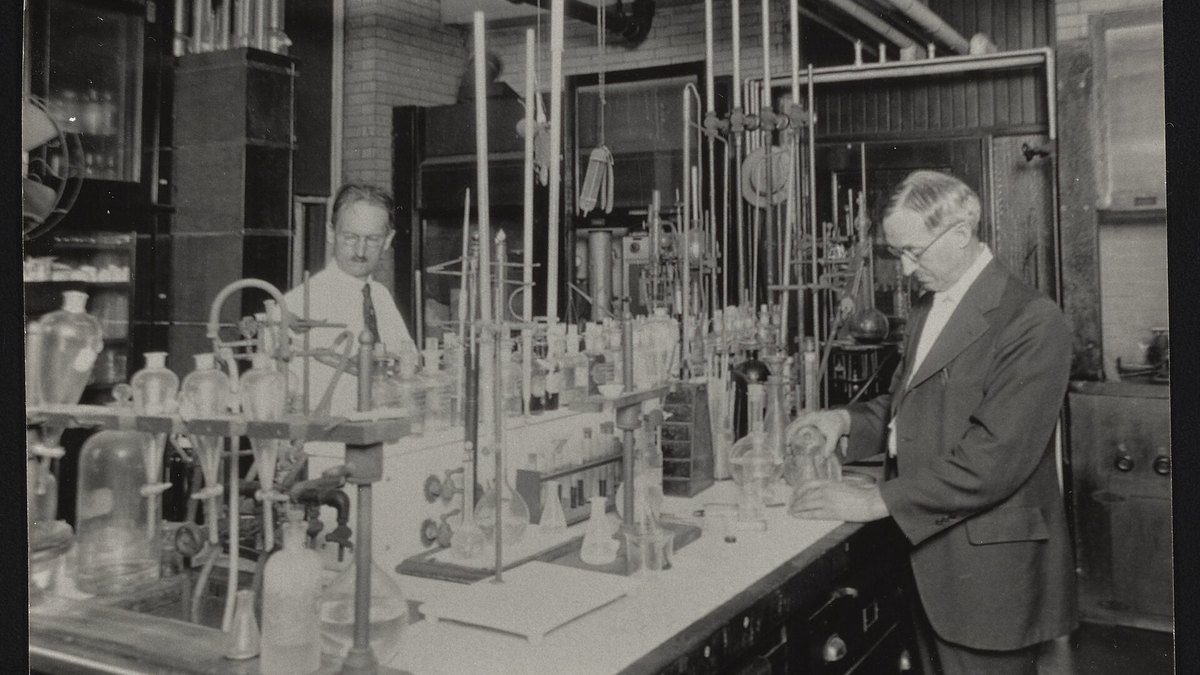
The discovery carried its own warning. The reason amylin formed that amyloid is that the human sequence is sticky — it self‑assembles into fibrils. So the first drug in the class, pramlintide5, could not simply be human amylin; chemists borrowed three proline substitutions from rat amylin, which does not aggregate, and grafted them in. A stability fix written directly into the sequence. Meanwhile the receptor amylin uses was itself a discovery with a backstory: calcitonin, the calcium‑lowering hormone, was identified by D. Harold Copp in 1961–62, and the version from salmon proved dramatically more potent and longer‑acting at the human receptor — a natural template that amylin/calcitonin drug designers still draw on. Two hormones, one shared receptor, and a single lesson that runs straight into modern peptide design: with this family, keeping the molecule from clumping is not an afterthought — it is half the drug.
The amylin and calcitonin arm is one component of a larger design question, and other Panacea pages take that question up from their own side. This page is where the arm itself is described; those pages are where it is put to work.
What is an amylin and calcitonin receptor agonist?
A peptide that activates the
amylin receptor, the calcitonin receptor, or both. The amylin receptor is the calcitonin
receptor combined with a RAMP accessory protein, so the two share machinery. Amylin agonists
such as pramlintide and cagrilintide reduce appetite, slow gastric emptying and suppress
glucagon, adding a satiety mechanism that works alongside GLP‑1 drugs rather than
copying them.
What does Amylcaltrutide refer to?
Amylcaltrutide is an investigational amylin
and calcitonin receptor agonist name used by Panacea Bio Chem, a custom‑peptide
research company. The name reflects the research direction toward peptides that engage the
amylin and calcitonin receptor family. Its specific sequence, receptor profile and data are
proprietary and supplied by the operator; nothing about them is claimed or invented here,
and nothing here is medical advice.
Has anyone combined GLP‑1 and amylin in a single molecule?
Yes.
Zenagamtide is a unimolecular GLP‑1 and amylin receptor agonist — one peptide
chain addressing both receptor systems — and two phase‑2 trials in type 2
diabetes were published on 15 August 2026, one a once‑weekly subcutaneous
form and one a once‑daily oral form. That differs from CagriSema, which is two
separate molecules given together. The phase‑2 result supports the idea that one
architecture can address more than one metabolic pathway; it does not establish that adding
further receptor arms is beneficial.
Is there an amylin receptor gene?
No, and that is the most surprising fact in
this field. There is no dedicated amylin‑receptor gene. The amylin receptor is the
calcitonin receptor combined with a receptor activity‑modifying protein (RAMP), a
result reported independently by two laboratories in 1999. RAMP 1, 2 or 3 gives
AMY‑1, AMY‑2 or AMY‑3, three receptors with different pharmacology built
from one receptor gene.
How is amylin different from GLP‑1?
GLP‑1 is a gut incretin that
mainly drives glucose‑dependent insulin release and central satiety. Amylin is
co‑secreted with insulin from the same beta cells and works through a separate circuit
— slowing gastric emptying and suppressing glucagon and food intake via the area
postrema. Because they act through different pathways, an amylin agonist and a GLP‑1
agonist can be combined, as in CagriSema, to add their satiety effects together.
What are pramlintide, cagrilintide and CagriSema?
Pramlintide is a synthetic
amylin analogue given at mealtimes; three proline substitutions borrowed from rat amylin stop
the human peptide aggregating. Cagrilintide is a long‑acting, once‑weekly amylin
analogue that also activates calcitonin receptors, studied for obesity. CagriSema is
cagrilintide combined with the GLP‑1 agonist semaglutide, pairing amylin‑driven
and incretin‑driven satiety in one weekly regimen.
Recent developments in the field — refreshed 2026-09-17 by Panacea Bio Chem.
Every PubMed record below was retrieved and its authorship, journal and year checked against the record itself on 6 September 2026. Encyclopedia entries are listed separately, as background rather than as evidence.
The Panacea Technology Universe
Proprietary Panacea Bio Chem Ltd technologies, invented by Bogdan Dicoias — what each one does, and why it leads its class.
 Lyoprester®The only dual-chamber cartridge that is autoreconstitution-enabled, vacuum-sealed and argon-fillback.lyoprester.com ↗
 P-EARLs™Panacea-Engineered Aseptic Reconstitution Liquid(s) — each tuned to the peptide it wakes.p-earls.com ↗
 Peptourbillon™The layered peptide formulation architecture — single- or multi-layer, never a blend.peptourbillon.com ↗
 RF Tunnel™The RF-formed central channel through the cake.rftunnel.com ↗
 TgShift™Raises the cake’s glass-transition temperature with RF — instead of chilling below it.tgshift.com ↗
 Cryolapse™Cryogenic pressure collapse under S3Pulse™ control — vapour redistributed through the whole cake, not its surface, impeding crust formation.cryolapse.com ↗
 LyoLevit™The cake levitates and spins in high orbit — driven by ultrasound and RF.lyolevit.com ↗
 Lyochrysalis™The integrated chamber housing the whole drying stack.lyochrysalis.com ↗
 S3Pulse™The control brain for every piece of Panacea hardware.s3pulse.com ↗
 Liquiprester™The single-liquid cartridge engineered so multiple peptide APIs coexist in one shared vehicle.liquiprester.com ↗
 Syntheseract™Continuous-flow peptide synthesis in a special, very fast and economical way.syntheseract.com ↗
 CFSPPS™Continuous-flow solid-phase peptide synthesis, written as its own category.cfspps.com ↗
 OxyDeplete™Degassing plus no-headspace doctrine — the oxygen-starved seal.oxydeplete.com ↗
 ArgonLock™The final inert-atmosphere lock under argon.argonlock.com ↗
 RedoxVault™Separation, not merely suppression — redox isolation in lipid micro-reservoirs.redoxvault.com ↗
 PleniDose™The shared filling gantry — one machine filling both the dual-chamber Lyoprester and the liquid Liquiprester.plenidose.com ↗
 IncreSure™The dose-metrology layer — verified API per pen increment.incresure.com ↗
 ElimiVoid™Front-void elimination without touching the metered dose.elimivoid.com ↗
 Cryoviscous™The characterised cold, high-viscosity, low-mobility conditioning state.cryoviscous.com ↗
 Vana Machine™Vacuum Assisted Needle Accessory — vacuum conditioning and plunger-locking for the cartridge.
 EZnject™The disposable auto-injector pen built around the Lyoprester.panaceaeznject.com ↗
 Dicoias ΨThe computed-chemistry advisory — every substance reduced to a vector across physical, electronic and formulation space.dcppsi.com ↗
 SealoPrester™Aseptic Cartridge Closure System — Seal o’ Precision + Sterility.sealoprester.com ↗
 Peptidic LiquidThe peptide formulation in solution — the active plus its buffers, cryoprotectants, lyoprotectants and scaffolders.peptidicliquid.com ↗
 DiastolVAC™Biomimetic diastolic vacuum control — the pneumatic circulatory system of the machine: pumps, valves and sensors as one ensemble.diastolvac.com ↗
 KineticON™Motion Integrity Architecture — the motion-control layer that lets the machine know what happened on every axis move.kineticon.org ↗
The publications indexed in PubMed in the last 30 days for "amylin receptor agonist" OR "calcitonin receptor agonist" already appear in Trending above — the next most recent in the field, refreshed weekly.